If you've ever wondered why getting fit after 40 feels so much harder than it did in your twenties, you're not imagining it.
Most people assume it's because they're getting older.
Age certainly plays a role, but it's usually not the biggest reason.
The biggest obstacle isn't your metabolism.
It isn't your motivation.
It isn't a lack of discipline.
It's pain.
Why Fitness Gets Harder After 40
When we're younger, our bodies recover quickly.
We can wake up sore, play basketball, lift weights, go for a run, and feel ready to do it again a day or two later.
As we age, things begin to change.
Your hips become tighter.
Your spine loses mobility.
Your shoulders become stiff.
Old injuries never seem to completely disappear.
One workout turns into several days of soreness.
Eventually, every movement reminds you that your body isn't the same anymore.
The problem isn't simply getting older.
The problem is that your body doesn't move the way it used to.
The Cycle That Stops Most People
Most people respond in one of two ways.
They ignore the pain.
Or they fight through it.
For a while, that works.
But eventually one of two things happens.
You get injured.
Or you become so tired of hurting that you simply stop exercising.
Neither option helps you become healthier.
Once you've stopped moving, coming back becomes even more difficult because you've lost strength, flexibility, balance, and confidence.
The cycle repeats itself.
The Secret Isn't Working Harder
Most fitness advice tells you to push harder.
Lift more.
Run farther.
Train longer.
But if every workout hurts because your body can't move properly, adding more exercise usually makes the problem worse.
The real secret to staying fit after 40 is building a body that can move without pain.
When your joints move freely...
When your muscles work together...
When your body is properly aligned...
Exercise stops feeling like punishment.
Instead, it becomes something your body can actually recover from.
Recovery Is No Longer Optional
When you were younger, recovery happened automatically.
Today, recovery has to become part of your routine.
That doesn't mean spending hours stretching every day.
It means giving your body what it needs to keep moving well.
Improving mobility.
Restoring flexibility.
Creating better alignment.
Reducing stiffness before it becomes pain.
Think of it this way:
You wouldn't expect your car to last 300,000 miles without changing the oil.
Your body deserves the same maintenance.
Movement Comes Before Fitness
Most people believe they need to get fit before they'll feel better.
In reality, it's often the opposite.
Move better first.
Then getting stronger becomes easier.
Walking becomes easier.
Playing sports becomes easier.
Lifting weights becomes easier.
Even everyday tasks become easier because your body isn't fighting itself with every movement.
Fitness doesn't begin with harder workouts.
It begins with better movement.
We Blame Age When We Should Be Looking at Movement
One of the biggest lies people over 40 believe is this:
"I'm getting older. Hurting is just part of working out."
I don't believe that's true.
Yes, our bodies change as we age.
Recovery takes longer.
We lose muscle if we don't use it.
Our joints become stiffer.
But age itself isn't usually what causes us to hurt every time we move.
More often, it's because our bodies have gradually lost the mobility, alignment, and movement they once had.
Think about it.
As kids, we could squat, run, twist, crawl, jump, and play for hours.
We weren't born stiff.
We became stiff.
That means many of the problems we've developed can improve when we begin restoring the way our bodies were designed to move.
I'm living proof.
Over ten years ago I suffered a slipped disc.
I was told my back would never be 100% again.
For a while, I believed it.
Then I stopped trying to simply strengthen my body and started trying to help it move better.
Instead of forcing movement through tight joints, I focused on creating space.
I improved the mobility in my hips.
I restored movement in my spine.
I learned how to breathe correctly.
I gave my body a daily recovery routine instead of waiting until something hurt badly enough to fix it.
Today, my back feels better than I ever thought it could.
Not because I'm younger.
I'm almost 50.
Not because I found a miracle cure.
I simply started maintaining my body the way it was designed to be maintained.
That's the lesson I wish more people understood.
Your body isn't broken because you've reached a certain birthday.
Like your teeth, your car, or your home, your body requires maintenance.
If you never maintain it, problems accumulate.
If you do maintain it consistently, your body has an incredible ability to recover, adapt, and move well again.
That's why I believe movement comes before fitness.
When your body moves well, exercising becomes enjoyable again.
You recover faster.
You hurt less.
You stay consistent.
And consistency—not age—is what determines how fit you'll become over the next decade.
My Experience
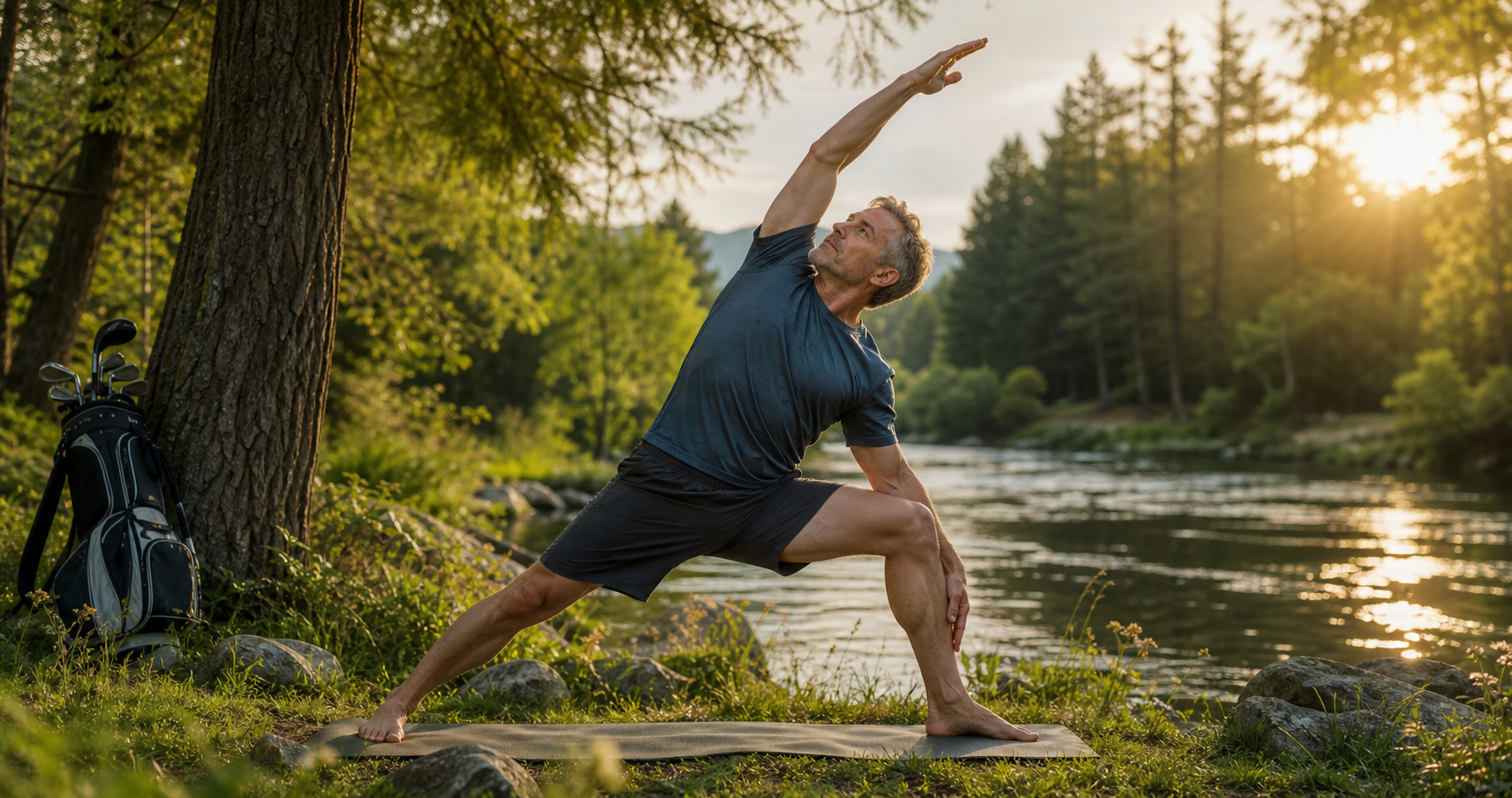
As a scratch golfer approaching 50, I spent years dealing with injuries, stiffness, and pain that made competing more difficult.
The biggest breakthrough wasn't finding a better workout.
It was finding a better recovery system.
Once my body could move the way it was designed to move, everything else became easier.
I recovered faster.
I had more energy.
I could train consistently without constantly battling aches and pains.
That's the part most fitness programs overlook.
Final Thoughts
If you're over 40 and struggling to stay consistent with exercise, don't assume you've become lazy or that your best years are behind you.
Ask yourself a different question:
Does my body actually move well enough to support the fitness goals I have?
Because when movement improves, consistency improves.
When consistency improves, fitness follows.
And that's how you stay active for decades—not just months.
If you're looking for a simple recovery system designed to help your body move better, reduce stiffness, and make exercise feel easier, visit GolfMobilityBlueprint.com. My daily routine takes less than 30 minutes, can be done almost anywhere, and was built to help active adults continue doing the sports they love for years to come.
Move Better. Swing Better. Live Better.